|
|
.
By March of 1781, thirty of the cabins had been completed, and there were orders to build ten more. Their dimensions were fourteen feet square, which was more or less the standard size for a soldier�s log hut during the Revolution, and would have been adequate to house ten to twelve men per hut.
In April, at least sixty more huts needed to be built, but getting the money from the State was always a problem. It was during this time that the Germans really began improving the existing structures and building new huts at what is known as the Winchester Hessian Barracks, or as the Germans themselves called it, the New Frederick Barracks.
When British forces surrounded Virginia on all sides and Tory activity increased within the Winchester vicinity itself, the security of the area was threatened and it became necessary to move most of the prisoners to the safety of the interior; this left the camp basically empty all summer and fall.
In November, the Barracks was in a shambles. Still incomplete and with only enough huts to house about eight hundred men, Winchester was woefully insufficient to accept the two thousand prisoners marching in from Yorktown.
Upon arrival on November 5th, about a thousand prisoners were obliged to �camp out�, and another five hundred of the British were granted permission to occupy a church in town.
|
|
|
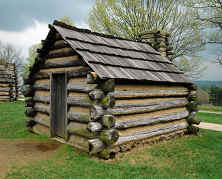
Valley
Forge Cabin
Replica of a cabin at Valley
Forge in which
soldiers of George Washington's army would have
stayed during the winter of
1777-1778.
Valley
Forge Pennsylvania National Historical Park |
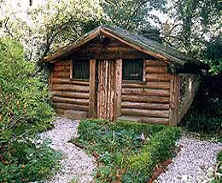
Hessian
Hut
Dismantled from the excavated site in New York
City
and rebuilt on its foundation in 1915.
Dyckman Farmhouse Museum,
NYC Dept. of Parks and Recreation.
|